

Best Places to Visit in Greece – My Journey Through Cities, Islands, and Culture
When I planned my trip to Greece, I wanted more than just island views and whitewashed houses. I was looking for a real mix some history, some peaceful villages, a bit of adventure and good food along the way.
In this guide I will take you through the best places to visit in Greece based on my own travel experience. From ancient cities like Athens to the calm vibes of Meteora and from the romantic island of Santorini to the less-crowded beauty of Naxos, each place had something different to offer.
I will also share some helpful tips like where I stayed, how I got around, what I ate and even a few things that didn’t go so well. That way, you can plan your own trip with clear expectations.
Let’s start exploring the best of Greece one destination at a time.
Looking for the best places to visit in Greece? From the ancient ruins of Athens to the peaceful monasteries of Meteora the quiet charm of Naxos the diverse landscapes of Crete and the relaxed beauty of Paros this travel guide covers it all with real experiences and helpful tips.
🏛 Athens – Where History and Daily Life Walk Side by Side
My journey to Greece began in Athens, and honestly it felt like stepping into a living museum. The moment I arrived the city felt warm not just in weather but in its character. What I loved about Athens was how the past and present blended so naturally. You could sip a cold coffee in a modern café and have a direct view of the Acropolis right from your seat.
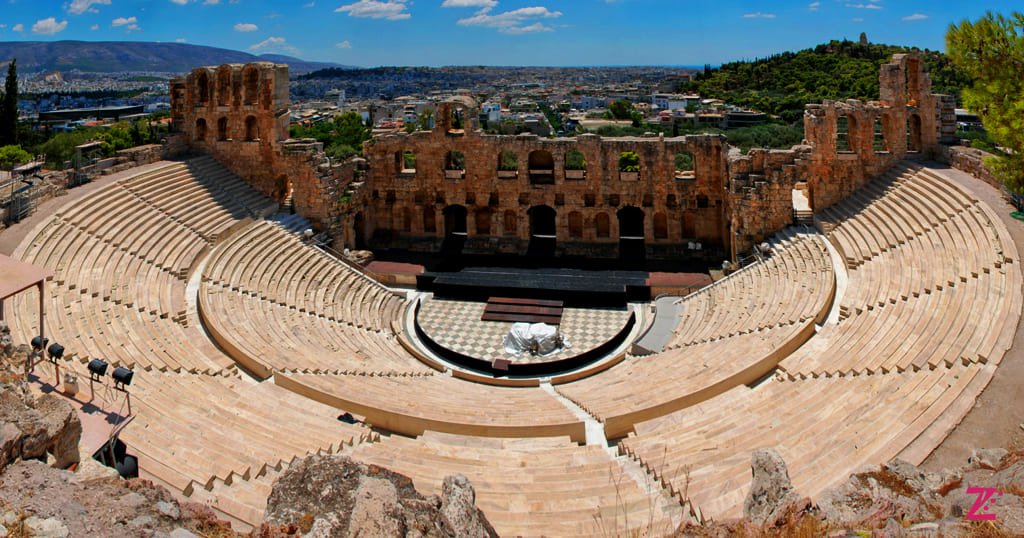
I stayed in the Plaka neighborhood which is charming and close to almost everything. It is a bit touristy, yes but the narrow streets, colorful houses and local taverns made it feel cozy and welcoming. For something more peaceful and budget-friendly, Koukaki is another area I would recommend quiet streets, fewer crowds and still close to major sites.
Getting around Athens is easy. I mostly used the metro clean, cheap and reliable. From the airport to the city center it was a smooth ride. For short distances, walking was the best option especially in neighborhoods like Monastiraki and Syntagma. You will always discover something on foot like a hidden bakery or a small bookstore.
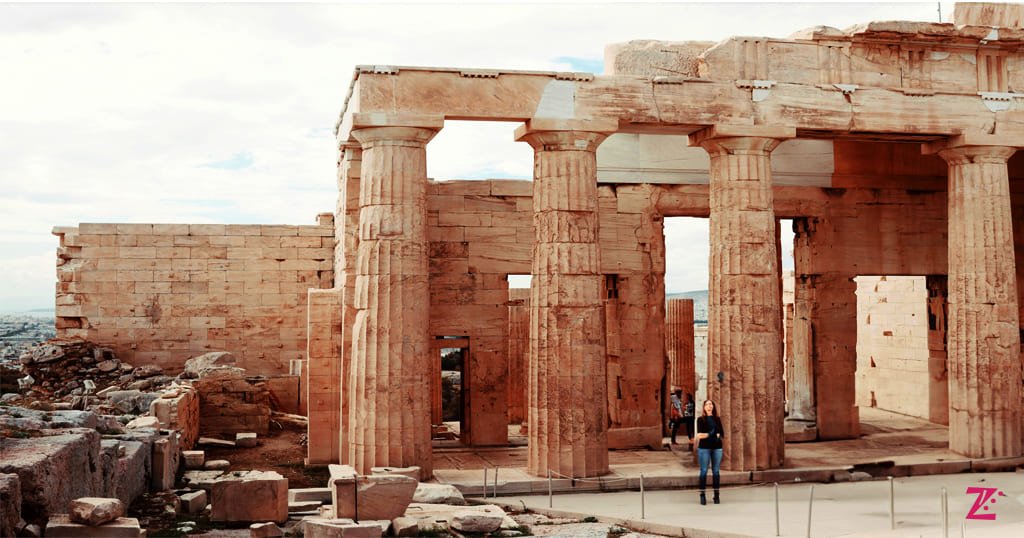
The Acropolis is the heart of Athens and yes, it is as stunning as they say. I visited early in the morning to avoid the heat and the crowds. Standing near the Parthenon felt surreal. But even more impressive for me was the Acropolis Museum. It is modern air-conditioned (a big plus in summer) and offers a great context before or after visiting the hill.
I didn’t expect Athens to feel so alive. Sure, the Acropolis is jaw-dropping, but what I remember most are the sunset views, the cobbled Plaka streets, and the way history quietly hugs every corner. It’s ancient, yes—but also unexpectedly warm and real.
I also took a short walk to Anafiotika a hidden village-like corner near the Acropolis. The houses are tiny and whitewashed almost Cycladic in feel. Most people miss it so it is quiet—a perfect break from the busy streets.
For food, I had the best gyros of my trip in a small place called “O Kostas” near Syntagma. It is a tiny shop with no seating but the flavor? Unforgettable. I also tried loukoumades (Greek doughnuts with honey) near Monastiraki and they were pure comfort food.
But not everything was perfect. Athens can feel chaotic—especially in areas like Omonia or near the central station. Some streets are noisy and packed and at night, certain parts did not feel very safe for solo walking. Also, during peak summer the heat and crowds at major attractions can be overwhelming. Booking tickets online helped save some time though.
Overall, Athens was a great place to start my Greece trip. It gave me the energy and background I needed to appreciate the rest of the country. I would suggest spending at least 2–3 days here to really enjoy it without rushing.
Affiliate Table – Plan Your Greece Trip Easily
| Service Type | Recommended Partner | Why I Recommend It | Link (Affiliate Placeholder) |
| ✈️ Flights | Trip.com | Great for comparing flight prices from India, US, or Europe to Greece | Book Flights |
| 🏨 Hotels | Trip.com | Wide selection of stays in Athens, Naxos, Crete, and Paros | Find Hotels |
| 🚗 Car Rentals | GetTransfer | Best rates for car rentals across Greek islands and Crete | Rent a Car |
🔒 Affiliate Disclosure:
This article contains affiliate links. If you book through them, I may earn a small commission at no extra cost to you. This helps support my travel storytelling and blog.
🏞 Meteora – A Quiet Escape Among Floating Monasteries
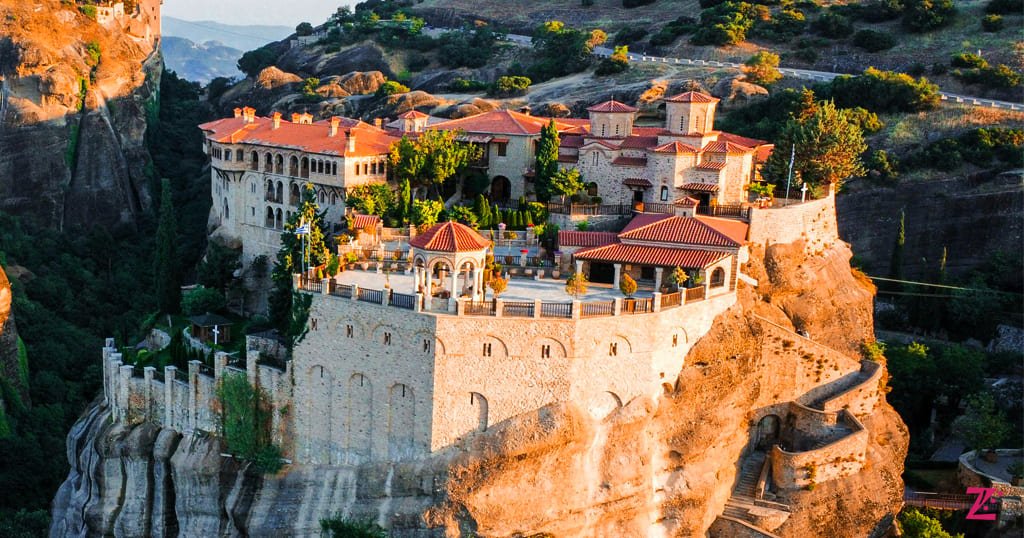
After spending a few fast-paced days in Athens I wanted to slow things down and Meteora was the perfect answer. I had seen photos before but nothing prepared me for how strange it looks in real life. Giant stone pillars rise straight out of the earth with ancient monasteries somehow perched right on top. It is peaceful, spiritual and completely different from the rest of Greece.
I took a train from Athens to Kalambaka the small town at the base of Meteora. The journey took around 4.5 hours and was scenic—rolling hills, quiet villages and farmlands. Kalambaka itself is quiet but has enough guesthouses, restaurants and rental shops to make you comfortable.
I stayed in a family-run guesthouse called Doupiani House which had a great view of the cliffs. There are other cozy options too often with balconies facing the rocks. It is much calmer than the cities or islands perfect if you need a break from crowds.
The real magic, of course is in visiting the monasteries. Out of the original twenty-four only six remain active and open to visitors. I explored three in a day: Varlaam, Great Meteoron, and Roussanou. Each one felt different in style and mood and the views from the top were something I will never forget.
To reach the monasteries I booked a half-day sunset tour which included transfers and a local guide who shared stories about the monks, the caves and even the geology of the rocks. It was worth every euro. If you prefer to go solo you can also rent a scooter or hike but some paths are steep so good walking shoes are a must.
Food here is simple but tasty. I had a delicious plate of moussaka and fresh bread at a local taverna called “Meteoron Panorama.” There are not many fancy places to eat but the warm service and fresh ingredients made each meal feel special.
One thing to keep in mind is that climbing stairs is unavoidable. Each monastery has long stone staircases and there are dress codes (shoulders and knees must be covered) so it is good to plan ahead. I saw some visitors turned away for not following the dress rules so do bring a scarf or shawl.
Also, public transport is limited especially after dark. So, staying near the town center or arranging return transport is important. Kalambaka itself winds down early and there is not much nightlife here.
Meteora may not have beaches or nightlife but it offers something deeper a feeling of stillness. It is the kind of place where you look around and realize how small we are compared to nature and time. If you are looking for a meaningful pause in your Greek adventure Meteora is worth adding to your list.
🌊 Naxos – A Quiet Island Escape Without the Crowd
If you are dreaming of Greek island life but want to skip the tourist rush of Santorini or Mykonos, Naxos might just be your perfect escape. I visited Naxos on a local’s recommendation and I am glad I listened. It is one of those islands where you can enjoy long beaches local food and peaceful villages all without the loud party vibe or inflated prices.
I reached Naxos by ferry from Athens (Piraeus Port) which took about 5.5 hours. It was smooth and scenic and arriving by sea gave me that classic island moment blue skies, white houses and soft winds.
I stayed near Agios Georgios Beach just a short walk from Naxos Town (also called Chora). The beach was clean, uncrowded and family-friendly. My hotel, a small boutique stay with breakfast served on the terrace cost much less than anything I’d find in Santorini.
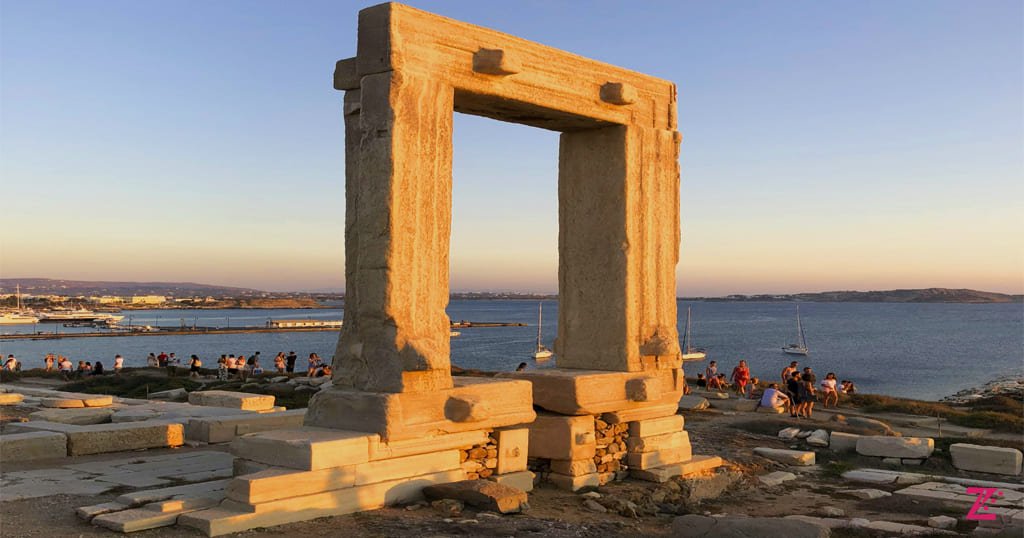
Naxos Town itself is lovely quiet alleys whitewashed buildings with blue shutters small cafés and a waterfront with sailboats gently rocking. One of the highlights is Portara the iconic marble doorway standing on a small island just off the harbor. I visited at sunset and it was peaceful not packed with crowds.
What makes Naxos feel truly different are the mountain villages inland. I rented a small car for a day and drove to Halki and Apeiranthos—both traditional villages with cobbled lanes, stone houses and local cheese shops. I had lunch at a family-run tavern in Halki where the owner explained how they make citron liqueur a Naxian specialty.
Food here is a big deal. It is simple, local and honest. I had the best grilled octopus and stuffed vine leaves in a tavern with no English menu and somehow that made it even better. Everything felt less polished but more real.
One downside to Naxos is that it is not a place for flashy nightlife or fancy resorts. If you are looking for upscale beach clubs or designer shopping this is not the island for you. Also, public transport is limited so renting a car or scooter is the best way to explore.
But that is what makes it special—Naxos doesn’t try too hard to impress. It is comfortable in its own skin. Locals were warm and I never felt rushed. It gave me space to breathe, relax and just enjoy the moment.
If you want a Greek island experience that is peaceful, beautiful and grounded in tradition Naxos is a great offbeat choice.
🏞 Crete – Where Mountains, Myths, and the Sea Meet
After visiting a quieter island like Naxos I was not sure what to expect in Crete. But the moment I landed in Heraklion the capital city I could feel the energy was different. Crete is big almost like a country of its own. You don’t just visit it—you explore it in pieces.
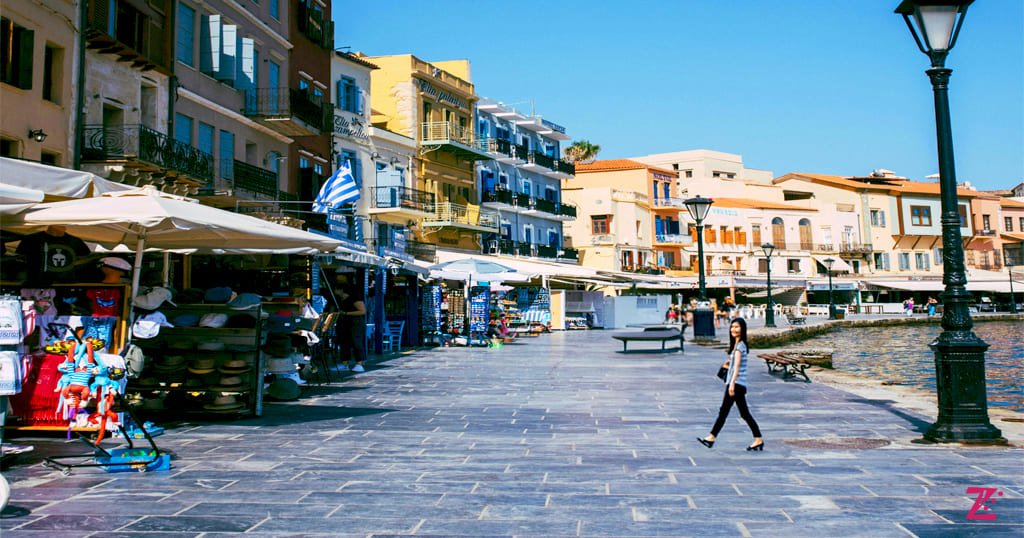
I began my trip in Heraklion mainly to see the famous Knossos Palace the heart of the ancient Minoan civilization. It is believed to be Europe’s oldest city. The ruins were bigger than I expected and walking among the columns and frescoes made history feel close. I also visited the Heraklion Archaeological Museum which helped me understand what I was seeing at the site.
But honestly, Heraklion is a bit crowded and noisy so after a day I took a bus to Chania a beautiful coastal town in the western part of the island. That’s where I really fell in love with Crete.
Chania Old Town is a maze of narrow lanes, pastel-colored buildings and cozy cafés. I stayed in a small guesthouse run by a local couple—they gave me fresh oranges every morning and told me where to find real Cretan food. I walked to the Venetian Harbor in the evening watched the lighthouse glow at sunset and had dinner by the water.
Crete is also great for nature lovers. One of the highlights of my trip was hiking through the Samaria Gorge one of the longest gorges in Europe. It is a full-day hike—about 16 km—through cliffs, forests and rivers. It was tiring but completely worth it. The scenery changes constantly and by the end you arrive at a small village by the sea.
For beaches Elafonissi stands out. Pink sand, clear blue water and a shallow lagoon perfect for relaxing. But it is important to note that during high season it can get quite crowded. I went early in the morning and found a peaceful spot.
Crete’s food was a highlight. It’s slightly different from the rest of Greece—more rustic and bolder. I tried dakos (a Cretan version of bruschetta), slow-cooked lamb with herbs and fresh mountain honey. Many ingredients are grown locally and even in touristy areas the food felt homemade.
The only challenge? Distances are long. Crete is not a small island so traveling between places can take time. If you are short on days it is better to pick a region—either west (Chania) or east (Agios Nikolaos)—and explore it fully rather than trying to cover the entire island in a rush.
Crete gave me a bit of everything—history, beaches, mountains, local culture and great food. It felt more real and less curated than many other destinations. If you are looking for a place that feels grounded and generous Crete is a must.
🌅 Paros – A Gentle Island with a Little Bit of Everything
After exploring the vastness of Crete I wanted to end my trip somewhere quieter—somewhere that still had Greek island charm but was not overcrowded. Paros turned out to be just that. It is not as famous as Santorini or Mykonos but that is exactly why I loved it.
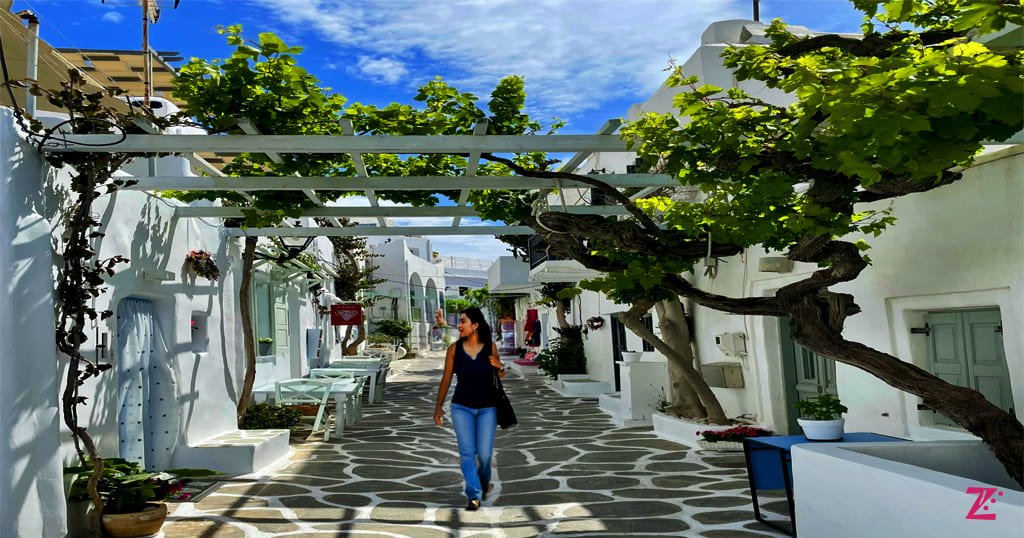
I arrived in Paros by ferry from Crete (with a short connection in Santorini) and the moment I stepped off the boat the island felt calm and friendly. I stayed in Naoussa a small town by the sea with whitewashed buildings, narrow streets and a little harbor where fishing boats bob gently in the water. It was postcard-perfect but also had a relaxed lived-in feel.
Paros is easy to explore. I rented a scooter to get around which was both affordable and fun. Roads were smooth, and the traffic was light compared to other islands. In a single day I managed to visit Golden Beach (great for swimming), Kolymbithres Beach (with its natural rock pools), and Parikia, the island’s capital.
Parikia had a nice mix of local life and tourist charm. I visited the Panagia Ekatontapiliani a historic Byzantine church that is over a thousand years old. It was peaceful inside and the cool marble floors were a break from the heat outside.
The food in Paros was another highlight. One evening in Naoussa I sat down at a small taverna right on the edge of the water and ordered grilled sardines, fresh salad and a glass of local white wine. The staff was friendly and the pace of service was slow in the best way possible—it let me enjoy the view and the breeze.
Paros also has a creative side. I stumbled upon a tiny art shop where local artists displayed their paintings and pottery. It felt more personal than the souvenir shops I’d seen elsewhere.
But every place has its drawbacks and Paros is no exception. In high season (July and August) it is not as quiet as people expect. Naoussa especially can get crowded in the evenings. Also, if you do not rent a vehicle, it might be harder to reach the island’s best beaches or inland villages. Public transport is there but it’s not frequent.
Still, I found Paros to be one of the most balanced islands I visited. It had beauty, culture, quiet beaches, a touch of nightlife and a strong local feel. It was not trying too hard it just let you settle in at your own pace.
If you are looking for an island where you can relax, explore a little, eat well and enjoy both stillness and charm Paros is a perfect choice to end your Greek adventure.
✍️ Closing Note
Greece is one of those rare places where every stop feels like a new chapter. From the ancient streets of Athens to the peaceful monasteries of Meteora, from the quiet charm of Naxos to the deep character of Crete, and finally the calm embrace of Paros every destination had its own rhythm.
What I appreciated most was how Greece does not rush you. It gives you time—time to sit at a café without a plan, to listen to the sea, to walk through ruins and wonder what life was like centuries ago.
Of course, not everything went perfectly. There were crowds, there was heat and there were places that did not match the hype. But that is the beauty of real travel—it is not about perfection. It is about moments. And in Greece I found plenty worth remembering.
If you are planning a trip, I hope this guide helps you choose the best places to visit in Greece for your own story. Go slow, explore freely and let each place speak to you in its own way.
FAQ
What is the best time to visit Greece for travel?
The best time to visit Greece is from late April to early June and from September to mid-October. The weather is pleasant, places are less crowded, and prices are more affordable than in peak summer.
Are the Greek islands better than the mainland?
It depends on what you’re looking for. The islands offer beaches and coastal beauty, while the mainland has more historical sites, mountain villages, and fewer crowds. A mix of both gives the best experience.
Is Athens worth visiting or should I skip it?
Yes, Athens is worth visiting. It’s one of the best places to visit in Greece for its historical sites like the Acropolis, as well as its lively neighborhoods and street food.
Which Greek island is best for a quiet, offbeat vacation?
Naxos and Paros are great options for a quieter island trip. They’re less commercial, have beautiful beaches, and still offer enough cafes and local charm.
How many days are enough to explore the best of Greece?
Ideally, 10 to 14 days will give you enough time to explore multiple places like Athens, Meteora, a couple of islands, and maybe even Crete without rushing.
Is it easy to travel between islands in Greece?
Yes, ferries run frequently between major islands and from Athens. But plan your routes ahead of time, especially during high season when tickets sell out quickly.
What are the downsides of traveling in Greece?
In peak summer, some places like Santorini and Mykonos get very crowded and expensive. Also, public transport can be limited on smaller islands, so renting a vehicle helps.