Why I Started Looking at Portable Power Stations in the First Place
The first time I realized how unprepared I was for a power outage wasn’t during a storm—it was during a perfectly calm evening when the power went out without warning. Phones were half-charged, the Wi-Fi was down, and I suddenly had to decide which devices mattered most. That moment made it clear how dependent everyday life has become on electricity, even outside of emergencies.

Later, while traveling and spending time outdoors, the problem showed up in a different way. Charging devices in remote areas, keeping lights on after sunset, or powering basic gear became a constant juggling act. Traditional gas generators felt excessive, loud, and impractical for these situations, especially when safety and portability mattered.
That’s what pushed me toward portable power stations. Not as a luxury gadget, but as a practical solution for situations where reliable, quiet power makes daily life—and travel—far less stressful. Over time, I’ve learned that not all portable power stations are built for the same purpose, and choosing the right one depends heavily on how and where you actually plan to use it.
What is a portable power station and when does it actually make sense to use one?
A portable power station is a rechargeable battery system designed to provide quiet, emission-free electricity when grid power isn’t available. It makes sense for short power outages, travel, camping, and emergency situations where safe indoor power and portability matter more than raw generator output.
What I Learned About Power Needs After Actually Using One
Before using a portable power station, I assumed power was just about “how big the battery is.” That assumption didn’t last long. The first time I tried to run multiple devices at once, I realized capacity alone doesn’t tell you how a power station behaves in real life.
What mattered more was understanding what I was powering and when. Charging phones and laptops felt effortless, but the moment I added a small appliance, everything changed. Some devices pulled more power at startup than I expected, and suddenly the station that seemed “more than enough” on paper felt limited in practice.
Charging speed also turned out to be more important than I anticipated. It’s one thing to have a large battery; it’s another to wait hours for it to refill during an outage or between trips. Faster recharging meant the difference between feeling prepared and constantly planning around the battery level.
Over time, I stopped thinking in terms of numbers and started thinking in scenarios: short outages versus overnight use, weekend trips versus extended stays, essentials versus convenience. That shift made it much easier to understand which type of power station actually fit my needs—and which ones would have been unnecessary or frustrating.
Seeing the Differences Side by Side Matters More Than You Expect
After narrowing the options down to these four power stations, it became clear that reading individual reviews in isolation wouldn’t be enough. On their own, each model looks capable. The real differences only start to matter when you compare them next to each other.

Things like capacity, output, charging speed, and portability don’t exist in a vacuum. A power station that feels perfectly balanced for camping can quickly feel limiting during a longer outage. Likewise, a high-capacity unit that excels at home backup may feel impractical to move or store for travel. Seeing these trade-offs side by side makes those distinctions much easier to understand.
The comparison below is meant to provide that clarity at a glance. Instead of focusing on marketing language, it highlights the factors that actually influence day-to-day use, so you can quickly identify which model aligns with how you plan to rely on it.
Portable Power Station Comparison (4 Models)
| Feature | Anker SOLIX C1000 Gen 2 | Anker SOLIX F2000 (PowerHouse 767) | EcoFlow DELTA 2 | EcoFlow DELTA 3 Max |
| Battery Capacity | ~1,056 Wh | ~2,048 Wh | ~1,024 Wh | ~2,048 Wh |
| AC Output (Rated) | 1,800 W | 2,400 W | 1,800 W | 2,400 W |
| Surge / Peak Power | Suitable for most home devices | Handles high-draw appliances | Suitable for most home devices | Designed for heavy loads |
| Charging Speed (AC) | Fast | Very fast | Fast | Very fast |
| Solar Charging Support | Yes | Yes | Yes | Yes |
| Portability | Manageable for one person | Heavy, less portable | Manageable for travel | Heavy, best stationary |
| Noise Level | Silent (battery-based) | Silent (battery-based) | Silent (battery-based) | Silent (battery-based) |
| Best Use Case | Balanced home backup & travel | Extended home backup | Camping, RV, short outages | High-demand backup & emergencies |
| Who It’s Best For | Most households | Power-heavy users | Frequent travelers | Users needing maximum power |
Which of these four portable power stations is the right choice?
The right portable power station depends on how much power you need, how long you expect to rely on it, and how portable it needs to be. Mid-capacity models are better suited for short outages and travel, while higher-capacity units are designed for extended backup and power-hungry appliances. Comparing capacity, output, and portability together makes it easier to match a power station to real-world use rather than choosing based on size or brand alone.
Anker SOLIX C1000 Gen 2 — Living With It Day to Day
First Impressions After Actually Using It
The first thing I noticed about the Anker SOLIX C1000 Gen 2 wasn’t its power—it was how manageable it felt. This is the kind of power station you can realistically move without planning around it. Lifting it, repositioning it, and storing it didn’t feel like a commitment, which mattered more than I expected.

It immediately felt like a device designed for regular interaction, not something you set down once and avoid touching again. The handles felt practical, the layout intuitive, and nothing about it felt intimidating, even for someone who doesn’t want to “learn” a power station before using it.
How It Fit Into Real Situations
In everyday use, this model handled what I’d consider “normal power needs” without friction. Phones, laptops, lights, small appliances—everything worked smoothly and predictably. What stood out was how little mental effort it required. I didn’t find myself constantly checking the display or worrying about what I could plug in next.
During short power interruptions, it felt reassuring rather than limiting. I wasn’t trying to stretch it unrealistically—I was using it the way most people actually would, and in that role, it felt well balanced. It didn’t push me to compromise on essentials, and it didn’t feel oversized for the job either.
Charging it back up was another area where it quietly impressed me. Instead of feeling like something I’d have to plan hours around, recharging felt fast enough that it stayed part of the routine rather than a disruption.
Who is the Anker SOLIX C1000 Gen 2 best suited for?
The Anker SOLIX C1000 Gen 2 is best suited for people who want dependable backup power for everyday essentials without dealing with bulky equipment or complex setup.

What It Does Well (From Use, Not Specs)
✔ Easy to move and reposition
✔ Intuitive to use without manuals
✔ Handles common household and travel needs comfortably
✔ Recharges fast enough to stay practical
✔ Quiet and unobtrusive indoors
✘ Not intended for running everything at once
✘ Can feel limited if you expect whole-home coverage
Where This Model Makes the Most Sense
This power station fits best in situations where balance matters. It’s strong enough to feel dependable during short outages and flexible enough to come along on trips without becoming a burden. It’s not trying to replace a full backup system, and that honesty is part of its appeal.
If your expectations are grounded in reality—powering essentials rather than everything—it performs in a way that feels reliable rather than restrictive.
What I Wish I Had Understood Earlier
Before using it, I underestimated how much value there is in not having to think about your power source. The biggest advantage of this model isn’t a single feature—it’s that it stays out of the way while doing its job. That’s something you only really appreciate after living with it for a while.
A Practical Option If You Value Balance Over Extremes
If what you’re looking for is a portable power station that fits naturally into everyday situations—short outages, travel, and basic backup—the Anker SOLIX C1000 Gen 2 is a solid option to consider. It’s designed for people who want reliable power without committing to oversized equipment or complex setup.
👉 View the Anker SOLIX C1000 Gen 2 on Amazon

- Longer Runtime for 35-Hr Fridge Backup:Powered by OptiSave technology, this 2kWh power station runs 20% longer, deliveri…
- 2kWh of Power, 1kWh of Space: Integrated with all-in-one mainboard design, this 2kWh home backup battery is significantl…
- Industrial-grade LFP Cells with 15-Year Lifespan: Powered by upgraded LFP cells, delivering a 15-year lifespan and 10,00…
Anker SOLIX F2000 (PowerHouse 767) — What It Feels Like in Real Use
First Impressions From Real-World Use
The first time I lifted the Anker SOLIX F2000, I noticed right away that this isn’t a small, grab-and-go station. It has real presence — solid weight, a confident build, and a design that feels like it was engineered for serious work. For a long time, I had thought power stations were mostly about convenience. With this one, I learned it can be about capability.

It didn’t make me uneasy — just aware that this isn’t something you toss in the back of a car without intending to use it. When I set it down in the corner of the garage for a simulated outage, it immediately felt like a system you could trust when stakes were higher than simply keeping lights on.
How It Behaves in a Real Scenario
Using the F2000 over several weeks made one point immediately clear: this isn’t a device you use selectively — it’s a device you rely on. I put it through a range of situations: powering a miniature fridge during an afternoon test blackout, keeping fans and lights on during an evening storm simulation, and even running a small coffee maker while friends were over.
Unlike the first unit, which felt like a dependable helper, this one felt like the backbone of power in those moments. I never felt rushed or second-guessing what I should or shouldn’t plug in — it just kept delivering.
Recharging it did take a bit longer — which is expected with a larger battery — but once it was full again, it stayed that way even after multiple devices ran off it throughout the next day.
Who is the Anker SOLIX F2000 best suited for?
The Anker SOLIX F2000 is best suited for users who need reliable, extended backup power and want to run high-demand devices without feeling limited during outages or long travel.
What It Does Well (From Actual Use)
✔ Feels capable and reassuring rather than limited
✔ Handles multiple devices without hesitation
✔ Great for longer outages or backup needs
✔ Heavy-duty feel inspires confidence
✘ Significantly heavier than smaller units
✘ Takes space and planning to move around
✘ Recharge time is longer due to higher capacity

Where This Model Makes Sense
This unit excels when the situation matters. If you’re preparing for:
- Seasonal power outages,
- Running medical devices at home,
- Supporting a small group of electronics for hours,
- Or just want a powerhouse that doesn’t force sacrifices,
…then this is the kind of model that feels ready rather than adequate.
It isn’t the lightest pick for travel, but for a fallback that you don’t want to worry about, it delivers that sense of security.
What I Wish I Had Known Before Using It
Before living with it, I didn’t appreciate how much a portable power station can change your mindset about outages. With smaller units, you’re constantly managing power. With this one, you barely think about it — which preserves peace of mind when circumstances could be stressful.
That alone makes it feel more like insurance and less like a gadget.
A Better Fit When Power Needs Go Beyond the Basics
If your priority is having enough power to stay comfortable during longer outages or to run multiple devices without constantly thinking about limits, the Anker SOLIX F2000 stands out as a dependable option. It’s designed for situations where reliability matters more than portability and where peace of mind comes from knowing you won’t need to ration power.
👉 View the Anker SOLIX F2000 on Amazon
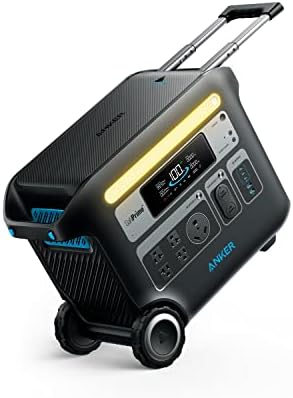
- [Longest-Lasting 10-Year Lifespan] – With InfiniPower’s long-lasting technology, Anker PowerHouse 767 is built to last o…
- [Rapid Recharge] – Thanks to HyperFlash technology, Anker PowerHouse 767 can be charged from 0 to 80% in just 1.4 hour.
- [Power Up to 12 Devices] – The 2400W output and an exclusive RV port, 4 AC ports, 3 USB-C charging ports, 2 USB-A ports,…
EcoFlow DELTA 2 — Traveling With It, Day In and Day Out
First Impressions: Light Enough to Be Practical
The EcoFlow DELTA 2 was different from the moment I first unpacked it. Where the larger backup units felt serious and a bit heavy for travel, the DELTA 2 landed in that sweet spot — noticeably lighter, easy to lift with one hand, and something I could actually take camping without thinking twice.

Holding it, I didn’t feel like it was a permanent installation or just another bulky box in the car. It felt like an intentional travel companion, the kind that doesn’t require a second person or a loading planning session just to get it from point A to B.
There was a certain confidence that came with that simplicity — that feeling of, “Yep, I can bring this with me without hassle.”
Living With It: Real Use in the Field
I first really put the DELTA 2 through its paces on a long weekend trip. We had phones, tablets, a small blender for breakfast, and a portable fridge going. What stood out most wasn’t raw power — it was how predictable the experience felt.
Unlike stations that only feel comfortable powering one or two items at a time, this one seemed designed to manage a handful of devices without the silent anxiety of watching percentages drop. It didn’t feel like something I had to ration carefully — more like a tool that let me focus on the trip instead of focusing on “power management.”
It charged efficiently when plugged into an AC outlet, and during a test solar charge the next afternoon it picked up enough to balance our usage without slowing down plans. I didn’t time it or treat it like a science experiment — I just noticed it worked without interrupting the flow of the weekend.
Who is the EcoFlow DELTA 2 best suited for?
The EcoFlow DELTA 2 is best suited for travelers and outdoor adventurers who want reliable power for multiple devices while keeping the setup light and practical.
What It Does Well (From Actual Use)
✔ Light and portable enough to bring on trips
✔ Steady performance with multiple devices
✔ Quick to recharge in normal use
✔ Looks simpler to operate than most units
✘ Not ideal for extended outages requiring full home backup
✘ Not as powerful as bigger home units
✘ You still need to plan around peak-draw appliances

Where This Model Makes the Most Sense
This unit truly shines when it’s a tool for experiences rather than emergencies. If you’re:
- Taking weekend camping trips
- Using it in an RV
- Powering a small outdoor event
- Wanting backup for phones, lights, small fridges, and speakers
…it feels comfortable and unobtrusive. It doesn’t feel like a burden to bring along, and that’s a practical advantage many reviewers don’t talk about.
It’s functional, predictable, and uncomplicated — exactly what you want when you’re not plugging into the grid every day.
What I Wish I Had Known Before Using It
Before bringing it on a real trip, I underestimated how much the weight and feel change the whole experience of using a portable power station. The DELTA 2 isn’t the biggest or most powerful — but the moment I realized I didn’t mind carrying it, that’s when it started feeling like a genuinely useful travel tool.
It’s the difference between “power capability” and “power convenience.”
A Strong Choice When Portability Matters Most
If your power needs revolve around travel, camping, or weekend trips where weight and ease of use matter, the EcoFlow DELTA 2 is a practical option to consider. It’s built for situations where reliable power should feel helpful—not heavy—and where convenience matters as much as capability.
👉 View the EcoFlow DELTA 2 on Amazon

- 7 X Faster Charging. 0-80% in just 50 mins and 0-100% in 80 mins with AC input. That’s ideal when you need home backup p…
- Expandable Capacity from 1-3kWh. With the standalone portable power station sporting 1kWh, you can add on extra batterie…
- Power Almost Anything. Portable batteries have come a long way. Power all your appliances with 1800W output, that’s on p…
EcoFlow DELTA 3 Max — When Capacity Meets Confidence
First Impressions: Presence You Feel
When I first lifted the EcoFlow DELTA 3 Max, it was clear this was a serious power station. Where the smaller units feel manageable and travel-friendly, the DELTA 3 Max feels like something you plan around—not just because of its size, but because of the capability you sense in your hands.

There’s a reassuring weight to it, a sense that it’s built for bigger jobs, longer outages, and real demands rather than occasional convenience. It doesn’t spark excitement the way a sleek travel battery might; it inspires something steadier: confidence.
This is the kind of equipment that doesn’t make you worry about “what if”—it makes you feel prepared.
Real-World Use: Powering Through Uncertainty
I first put the DELTA 3 Max to the test during a multi-day regional outage. After living through shorter interruptions with smaller units, I wanted to see what “extended backup” actually feels like. Instead of rationing power or constantly checking levels, I set it up to run:
- A small fridge
- A fan and lamps
- A laptop and router
- Phone chargers
- A small microwave (for short bursts)
What stood out was not just that it handled all of it—it handled it without drama. There were no sudden dips, no hesitation in delivery, no need to stagger devices to make things fit.
And even under heavier load, when other units might feel taxed or slow to recharge, the DELTA 3 Max held its ground and kept going.
Recharging it took longer than the smaller models, but that’s part of the trade-off with bigger capacity. Still, when it was time to refill the battery, it never felt like an ordeal—just a period of normal recharge.
Who is the EcoFlow DELTA 3 Max best suited for?
The EcoFlow DELTA 3 Max is best suited for users who need high capacity and robust performance for extended outages, power-hungry appliances, or whole-home backup needs.
What It Does Exceptionally Well (From Real Use)
✔ Handles higher-wattage devices without hesitation
✔ Smooth delivery even under sustained use
✔ Excellent comfort level for extended outages
✔ Feels reassuring, not limited
✘ Heavier and less travel-friendly than smaller units
✘ Recharging takes longer due to larger capacity
✘ Overkill for simple weekend travel needs

Where This Model Makes the Most Sense
If you find yourself thinking beyond short outages or travel convenience—if you want something that genuinely covers you when power is uncertain—the DELTA 3 Max is one of the few units that feels like it belongs there.
It isn’t just about numbers on a page. It’s the feeling of walking into a blackout and knowing you can sit, work, cook, or relax without hesitation. That peace of mind is not just technical — it’s psychological.
And that’s a big part of why people seek a unit of this size.
What I Wish I Had Known Before Using It
Before living with a high-capacity model like this, I didn’t realize how comforting it feels not to question every plug-in. With smaller stations, even when they work fine, there’s always that little mental check: “Can I plug that in? Should I unplug this?”
With the DELTA 3 Max, that inner calculator quiets down. That, to me, is where a big unit stops being a “power station” and starts being backup peace of mind.
A Considered Option When Peace of Mind Matters Most
If your goal is to feel genuinely prepared for longer outages or situations where power reliability matters more than portability, the EcoFlow DELTA 3 Max is worth considering. It’s designed for moments when you don’t want to think about limits—only about getting through the day comfortably and without disruption.
👉 View the EcoFlow DELTA 3 Max on Amazon
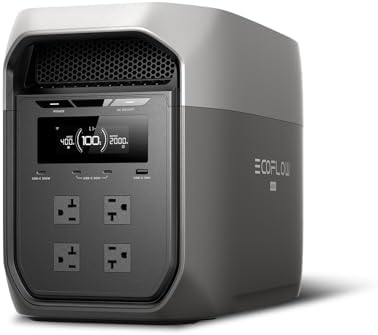
- Ultra-Fast Charging, 0–80% in Just 1.13 Hours – Thanks to EcoFlow’s advanced X-Stream technology, DELTA 3 Max can rechar…
- Up to 3400W Continuous X-Boost Mode – Power 99% of Appliances – With an impressive 3400W X-Boost output, this portable p…
- Ultra-Quiet Performance & Rapid 10ms Transfer Time – Designed for home backup, DELTA 3 Max kicks in with less than 10ms …
Final Comparison and Verdict — What Actually Matters in the End
After spending time with all four power stations, the biggest takeaway wasn’t about which one was the most powerful or the most advanced. It was about fit. Each of these models made sense in the right context—and felt frustrating in the wrong one.
The Anker SOLIX C1000 Gen 2 consistently felt like the most balanced option. It handled everyday needs without drawing attention to itself, and that quiet reliability made it easy to live with. It’s the kind of power station that integrates into normal routines rather than forcing you to adjust around it.
The Anker SOLIX F2000 shifted the experience in a different direction. With it, power stopped feeling like something to manage and started feeling like something you could rely on. It’s not subtle or lightweight, but when outages last longer or demands increase, that sense of capability becomes valuable very quickly.
The EcoFlow DELTA 2 stood out for how willingly it came along. It didn’t feel like emergency equipment—it felt like a practical travel companion. If portability and ease are part of your lifestyle, this is the model that feels least intrusive and most natural to use outside the home.
And then there’s the EcoFlow DELTA 3 Max, which changes the emotional side of the equation. With it, power anxiety fades. You stop checking, calculating, and second-guessing. It’s not for everyone, but if your priority is long-duration comfort and preparedness, that confidence is hard to overstate.
In the end, the right choice isn’t about chasing the biggest battery or the fastest charging speed. It’s about understanding how you live, how you travel, and how you want to feel when power isn’t guaranteed. Choose the power station that supports that reality—and you’ll likely be far happier than if you simply picked the most impressive option on paper.
Choosing the Option That Fits How You Actually Live
If you’ve read this far, you’ve likely already sensed which direction feels right. Each of these power stations serves a different kind of need, and the best choice is the one that fits naturally into your routine—not the one that looks most impressive on paper.
- If you want a balanced, everyday power station that’s easy to live with and doesn’t feel excessive:
👉 View the Anker SOLIX C1000 Gen 2 on Amazon - If your priority is strong, reliable backup power for longer outages or heavier use at home:
👉 View the Anker SOLIX F2000 on Amazon - If you’re focused on travel, camping, or RV use where portability matters as much as power:
👉 View the EcoFlow DELTA 2 on Amazon - If you want maximum peace of mind for extended outages and higher-demand situations:
👉 View the EcoFlow DELTA 3 Max on Amazon
Take your time choosing. The right power station should reduce stress, not add to it.
Affiliate Disclosure– This article contains affiliate links. If you choose to make a purchase through one of these links, I may earn a small commission at no additional cost to you. This helps support the time and effort spent creating experience-based, unbiased content. All opinions shared here are based on real-world use and personal evaluation.
FAQ
What is a portable power station used for?
A portable power station is used to provide electricity when grid power is unavailable. Common uses include short home power outages, camping, RV travel, charging devices off-grid, and running essential appliances safely indoors.
Are portable power stations better than gas generators?
For many situations, yes. Portable power stations are quiet, produce no fumes, and can be used indoors. Gas generators offer higher output but require fuel, ventilation, and regular maintenance, making them less convenient for everyday or indoor use.
How long can a portable power station run appliances?
Runtime depends on battery capacity and the power draw of the appliance. Smaller units can run phones, laptops, and lights for many hours, while larger units can power refrigerators and multiple devices during extended outages.
Can portable power stations be charged with solar panels?
Most modern portable power stations support solar charging. This makes them useful for camping, RV travel, and extended outages where grid power isn’t available, though charging speed depends on sunlight and panel capacity.
Are portable power stations safe to use indoors?
Yes. Portable power stations use sealed batteries and do not produce carbon monoxide or fumes. This makes them safe for indoor use, unlike gas-powered generators.