Gangtok to Nathula Pass: Winding Roads & Himalayan Dreams
If the idea of a road trip through winding Himalayan roads snowy landscapes and historic destinations excites you then a journey from Gangtok to Nathula Pass is just the adventure you are looking for. Nathula Pass situated at a jaw-dropping altitude of 14,140 feet offers stunning views of a touch of history and unforgettable experiences. There is a certain kind of magic that lives in the mountains—a magic that does not rush, does not roar, but simply breathes.
If you have ever stood in Gangtok the capital of Sikkim with your heart leaning toward the east, you will know exactly what I mean. A journey through foggy lakes, hushed prayers, windswept barracks and tales that cling to every turn like ancient tunes resonating in the valleys the road from Gangtok to Nathula Pass is more than just a trip.
Let me take you along on this journey—not as a guide, but as a fellow traveler with eyes wide open, heart racing with excitement and a backpack full of awe.
Planning a trip from Gangtok to Nathula Pass? This scenic 58-kilometer journey is packed with adventure and stunning views of the Himalayas. Along the way, stop at the serene Tsomgo Lake, enjoy a ropeway ride and visit the iconic Baba Mandir. Nathula Pass standing at 14,140 feet you will witness the Indo-China border and its historical significance. You will need a permit to visit that is easily arranged by a local agent. Shared taxis, private cars or package tours from Gangtok make the journey convenient. The best time to visit is from March to May or September to November for clear weather and breathtaking vistas. Ready to explore this once-in-a-lifetime destination? Pack warmly, stay hydrated and prepare for a journey filled with culture, history and jaw-dropping landscapes!
What Makes Nathula Pass Special?
Gangtok greets you with calm not with noise. Nestled in the embrace of the Eastern Himalayas this hill town feels more like a dream than a place. On a crisp morning, I watched the sunlight bleed gold over the Kanchenjunga peaks, casting its sleepy brilliance across the town’s fluttering prayer flags and the colorful rooftops. The air was cool, fresh and tinged with an undercurrent of adventure—because today was the day, I was heading towards Nathula Pass that legendary mountain pass that once cradled the Silk Route linking India with Tibet.
Before the wheels rolled forward permits were checked and the local driver—a wise smiling Sikkimese man named Dorjee—tied a scarf to the rear-view mirror whispering a quick prayer. In Sikkim, journeys are sacred and this one especially so.
Nathula Pass is not just another scenic spot. It is a slice of history—a once-thriving trade route that connected India to Tibet via the Silk Road. Today it is a border pass guarded by soldiers and serves as a unique destination where you can witness the Indo-China border firsthand. This trip offers a mix of serenity and adventure from the fluttering prayer flags to the chilly mountain breeze.
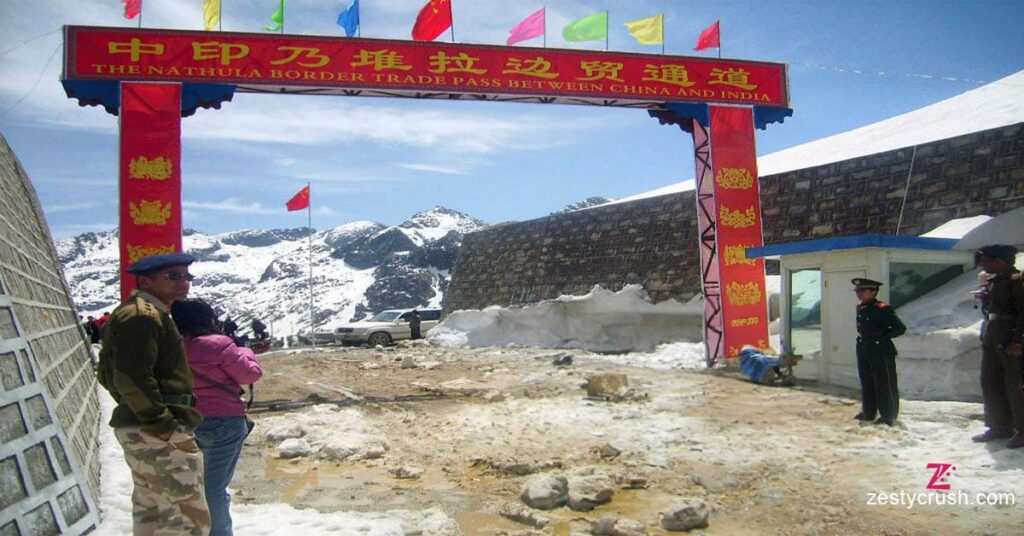
How to Reach Nathula Pass from Gangtok
The drive from Gangtok to Nathula is not long by distance—about 58 kilometers—but the terrain rewrites time. As we began to climb the road curled like a ribbon around the cliffs, sometimes disappearing into fog sometimes revealing valleys so deep they made you catch your breath.
I leaned out the window letting the wind tangle my hair as we crossed army camps, waterfalls and hillsides blooming with rhododendrons. Dorjee pointed to the far ridges—”That is where the yaks roam during spring,” he said and I could almost hear the soft thud of their hooves in my imagination. Every turn felt like a postcard unfolding itself and then suddenly, like a gem nestled in the palm of the mountain Tsomgo Lake appeared.
Transportation Options
Choosing the right mode of transport is key to enjoying your trip. Let’s break it down:
1. Shared Jeeps or Taxis
- Best For: Budget-conscious travelers or solo adventurers.
- Cost: ₹4,500–₹6,500 per vehicle (round trip).
- Pros: Affordable and a great way to meet fellow travelers.
- Cons: May feel cramped not ideal for those seeking privacy.
2. Private Taxis
- Best For: Families, groups or travelers seeking a personalized experience.
- Cost: ₹8,000–₹12,000 (round trip).
- Pros: Flexibility to stop and explore on your terms.
- Cons: Higher cost compared to shared options.
3. Gangtok to Nathula Pass Packages
- What is Included: Transport, permits and sometimes visits to nearby attractions like Tsomgo Lake and Baba Mandir.
- Cost: ₹5,500–₹7,500 per person.
- Pros: Hassle-free option with everything organized.
- Cons: Limited customization of itinerary.
4. Tsomgo Lake Ropeway and Combination Tours
Some travelers opt for combination tours that include a visit to Tsomgo Lake Ropeway before heading to Nathula Pass.
- Tsomgo Lake Ropeway Ticket Price: ₹360–₹500 per person.
- Pro Tip: Combine activities for a full day of adventure and spectacular views!
Permits for Nathula Pass
Since Nathula Pass is located near the international border getting a permit is mandatory. It is easy if you follow these steps:
- Apply Through an Authorized Agent: Individuals cannot apply directly. Travel agents in Gangtok handle the process.
- Required Documents:
- Valid ID proof (Aadhaar, passport, voter ID).
- Two passport-sized photographs.
- Permit Cost: ₹200 per person (agent fees may apply).
- Permit Booking: While there is no direct online booking option agents can facilitate the process quickly.
Pro Tip: Apply for your permit a day in advance to avoid delays.
Key Stops on the Journey
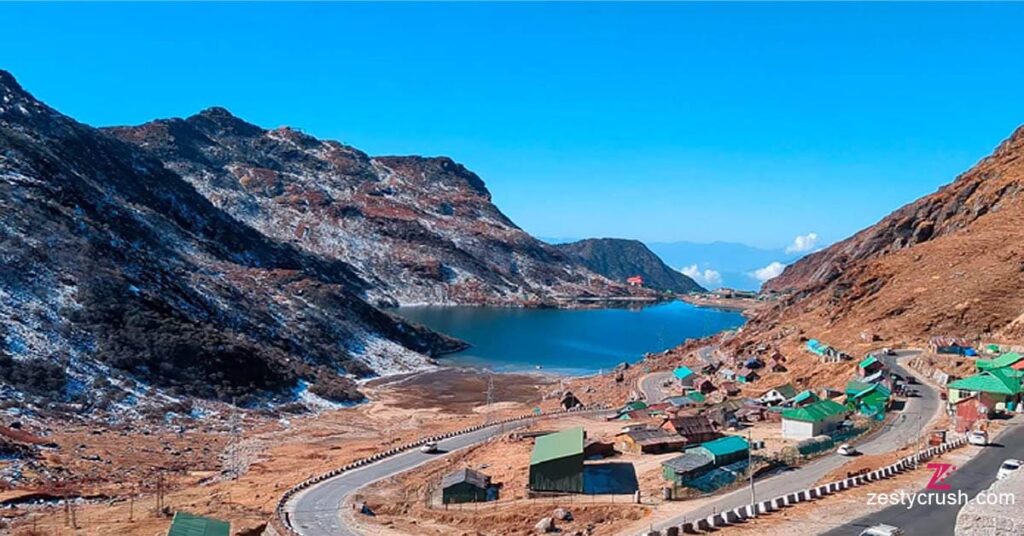
1. The Stillness of Tsomgo Lake (Changu Lake Sikkim)
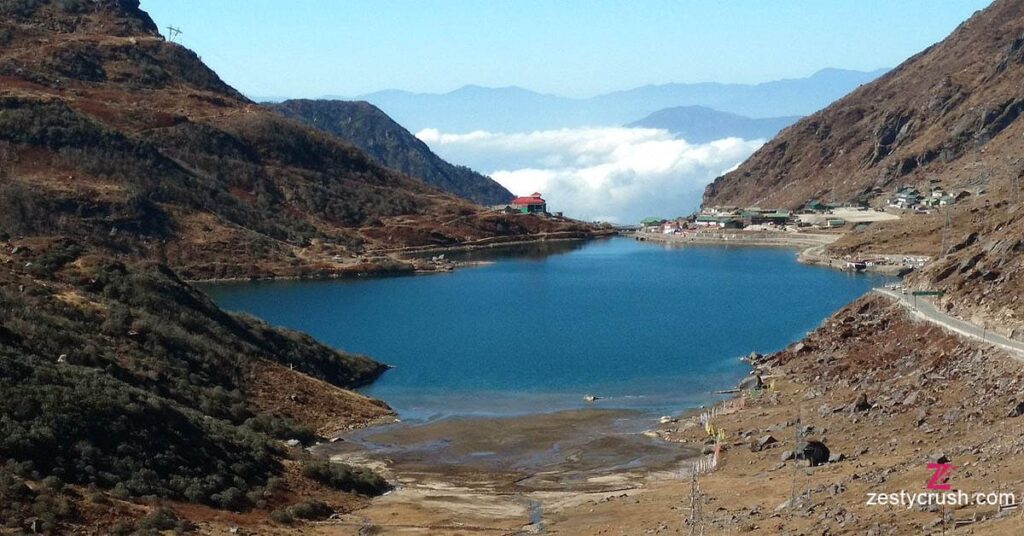
Distance from Gangtok: 41 km (1.5 hours).
Changu Lake Height: 12,310 feet.
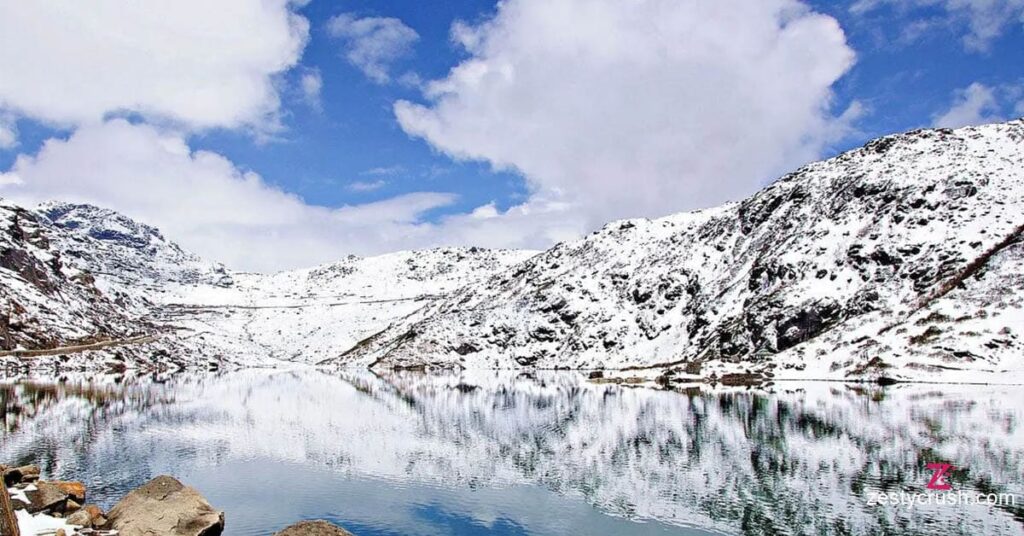
They call it Changu Lake too but names do not matter when the silence takes over. Tsomgo Lake sat still like a mirror for the sky. Snow capped the surrounding peaks and prayer flags fluttered in bright threads around its edges. Locals believe the lake reflects the mood of the gods—and standing there wrapped in layers and wonder I could feel something divine.
Yaks stood patiently their backs adorned with colorful woolen saddle-cloths. I did not ride one—somehow it felt better just to watch them like characters out of an ancient Himalayan folk tale. The lake was partially frozen and the wind carried whispers—stories, maybe of all the souls who had stood there before me.There were vendors selling hot tea and steaming bowls of noodles.
I sipped a cup of butter tea, which warmed more than just my hands. I let the taste linger as did the silence. But the road still called.This glacial lake is a marvel of nature especially when its shimmering waters freeze in winter. Don’t miss the chance to ride the Tsomgo Lake Ropeway which offers panoramic views of the surrounding snow-capped peaks.
2. Baba Mandir– Where the Spirit Never Sleeps
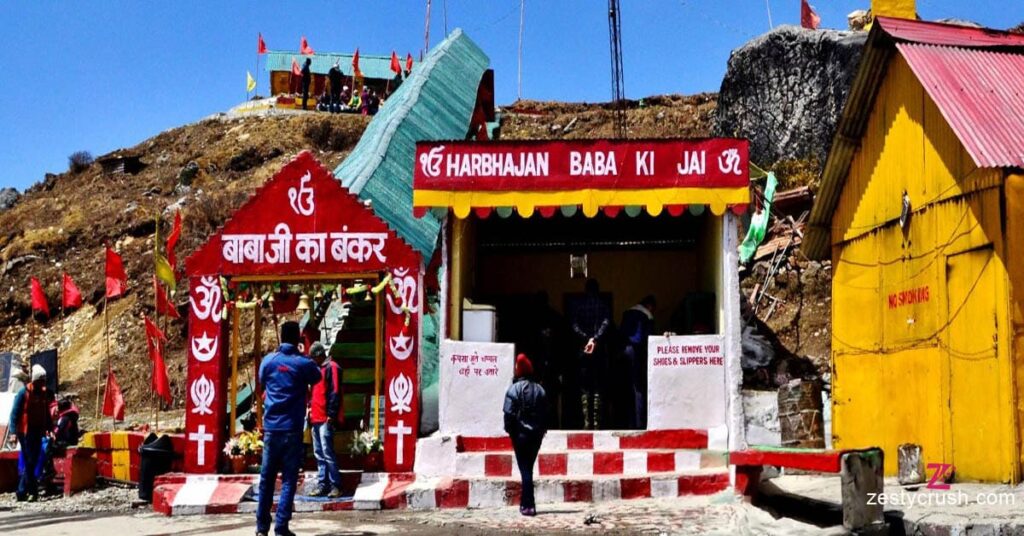
Distance from Tsomgo Lake: 17 km (40 minutes).
The next stop not far from Tsomgo was something unexpected—Baba Mandir. At first glance it looked like just another army shrine but the truth is far more layered. This is not your regular temple—it is a memorial to Captain Harbhajan Singh a soldier who died near Nathula in 1968.
Legend says Baba Harbhajan still guards the border. Soldiers speak of dreams where he warns them of danger. His clothes are washed daily, his bed made and his meals served—as if he still lives. And maybe, just maybe he does.
The Indian Army has turned this into a place of reverence. I watched a few jawans bow before the shrine their expressions quietly respectful. The air felt charged—not with solemnity but with a kind of spiritual companionship. It reminded me that not all guardians wear cloaks—some wear uniforms and never really leave. You can also visit the Old Baba Mandir Sikkim located nearby for a quieter experience.
3. Nathula Pass– Where Two Worlds Meet
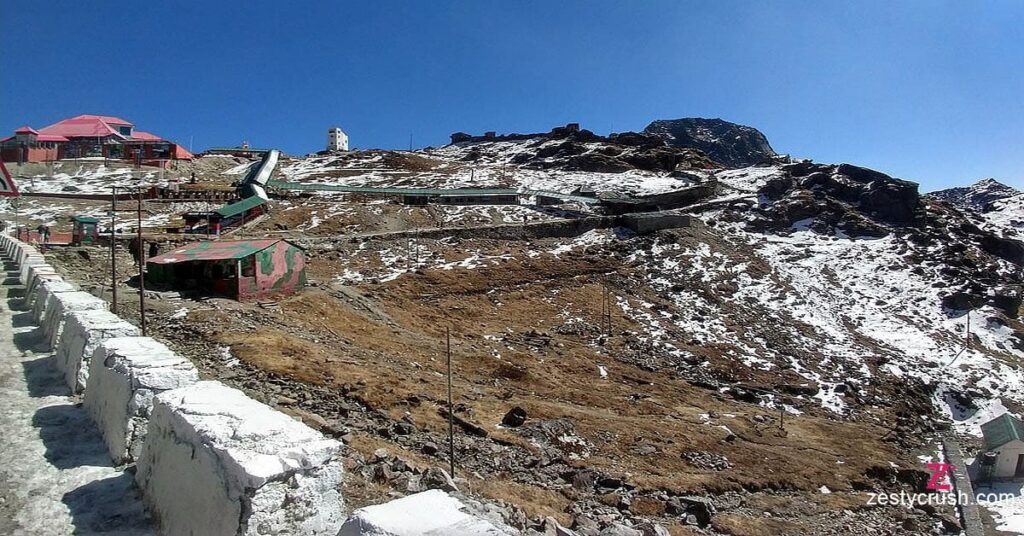
Height in Feet: 14,140 feet.
Nathula Pass at the India-China border you will be awestruck by the breathtaking views and the historical significance of this location. Climbing higher the snow thickened. The air grew thin and I could feel my breath becoming slower, deeper. Then, suddenly there it was—Nathula Pass. At 14,140 feet above sea level Nathula is not just a border it is a bridge between India and Tibet.
Barbed wire separated the two countries and across it stood a solitary Chinese soldier—expressionless, distant and yet oddly familiar. A few steps from him Indian soldiers smiled and guided us proud yet humble in their khaki and olive.
I stood there heart pounding—not from the altitude but from something far more profound. Here, where monks once carried silk and salt where caravans once passed with bells and chants the air is thick with memory. The snow crunched beneath my boots as I looked around. The Indian flag flapped fiercely in the wind and prayer flags crisscrossed the sky like prayers frozen mid-flight. A soft snowfall began. It was not fierce just gentle—as if the mountains were blessing our presence.
4. The Descent to Nathang Valley – A Hidden Hymn
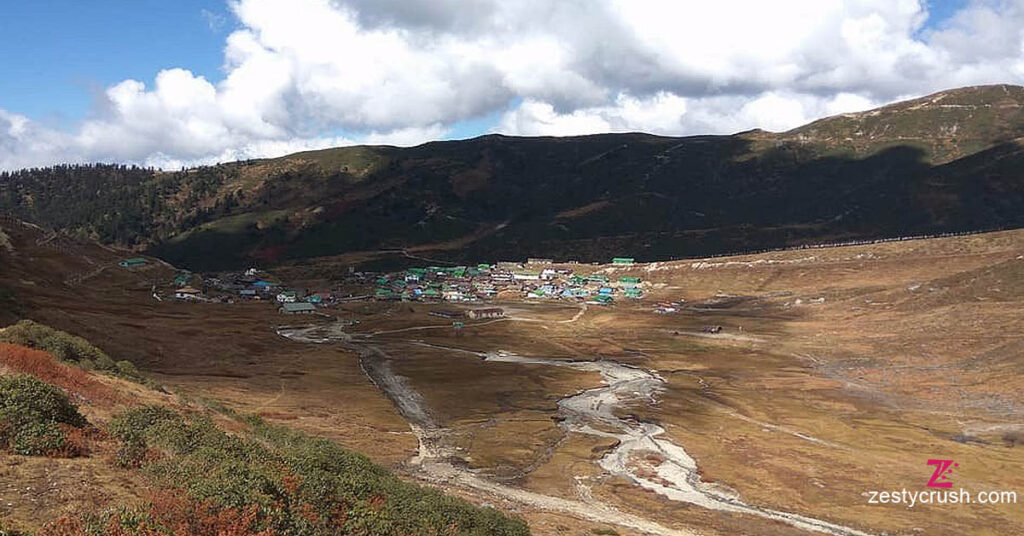
Nathang Valle Altitude: 13,500 feet.
Nathang Valley is known as the “Ladakh of East Sikkim,” this valley is a hidden gem. Stop here for some stunning landscapes and a peaceful vibe. Most travelers turn back at Nathula but we continued—toward the Nathang Valley (sometimes spelled Nathang) a place many still have not heard of and perhaps that is what keeps its soul intact.
The snow melted into golden meadows as we sank down the valley. As we went by, stone huts appeared from behind hills and Yak ranchers waved. Nathang had the impression that it was unaffected as though it had been quietly waiting for someone to appreciate its elegance.
In spring, this valley becomes a painter’s palette of wildflowers. In winter, it is blanketed in white with only the distant bleating of yaks breaking the stillness. But in every season it sings a quiet cradlesong—the kind you do not hear with your ears but with your soul. Dorjee shared tales of how monks once meditated here for months undisturbed by the outside world. I believed it. The place felt like a secret whispered by the Himalayas.
Coming Home – But Not the Same
The return to Gangtok was quieter. Maybe it was the altitude wearing off or maybe it was the mountain spell finally settling into the soul. I watched the road unwind itself as we descended and I could not help but feel changed.
This was just not a trip. It was a brush with something eternal. From Tsomgo’s mirrored stillness to Baba Mandir’s unwavering faith from Nathula’s icy solemnity to Nathang’s gentle mystery—this journey had etched itself into my bones.
And though I returned to the bustle of Gangtok something within me remained behind—perhaps at the lake’s edge or on the snow-laced border or somewhere in a prayer flag dancing over the Himalayas.
Where to Stay in Gangtok
Gangtok has accommodation options for every budget. Here are some recommendations:
Luxury Hotels
- Mayfair Spa Resort & Casino: Price starting at ₹10,000 per night.
- The Elgin Nor-Khill: Price starting at ₹12,000 per night.
Budget-Friendly Options
- Hotel Sonam Delek: Price ₹3,500 per night.
- Golden Heights Hotel: Price ₹2,500 per night.
Best Time to Visit Nathula Pass
EAST SIKKIM WEATHERSeasonal Breakdown
- Spring (March to May): Perfect for clear skies and blooming rhododendrons.
- Summer (June to August): Not ideal due to monsoons and possible landslides.
- Autumn (September to November): Crisp air and fewer crowds make it ideal.
- Winter (December to February): Snowy landscapes but beware of road closures.
Nathula Pass Timings and Open Days
- Open Days: Wednesday to Sunday.
- Closed Days: Monday and Tuesday or due to adverse weather conditions.
Things to Do at Nathula Pass
- Witness the Indo-China Border: A once-in-a-lifetime experience to see soldiers from both nations standing guard.
- Explore Baba Mandir: Learn about the fascinating story of Harbhajan Singh.
- Admire Tsomgo Lake: Take a leisurely walk or a yak ride around this serene lake.
Table of Distances
| Landmark | Distance (km) | Travel Time (Approx.) |
| Gangtok to Tsomgo Lake distance | 41.2 | 1.5 hours |
| Gangtok to Baba Mandir | 58.1 | 2 hours |
| Gangtok to Nathula Pass | 58 | 2–3 hours |
| Tsomgo Lake to Baba Mandir | 17 | 40 minutes |
| Changu Lake to Gangtok | 42 | 1.5 hours |
| Nathula Pass to Gangtok | 58 | 2–3 hours |
Conclusion
If you ever find yourself in Sikkim do not miss this road. Secure the permits early—Nathula lies on a protected border zone and Indian nationals need a special pass arranged through a travel agency. Wear warm layers, drink water and walk slow—the altitude is not a race. But most importantly, open your heart. Because the journey from Gangtok to Nathula Pass is not measured in kilometers. It is measured in wonder, in whispers, in the stories you will carry home.
And if the wind feels different on your skin when you return—know that the mountains have spoken. A trip from Gangtok to Nathula Pass is not just a journey; it’s an unforgettable experience. With stops at Tsomgo Lake, Baba Mandir, and the mesmerizing Nathula Pass, you’ll witness the beauty of Sikkim in all its glory. Plan well, pack warmly, and get ready to create memories that will last a lifetime.
FAQ
How do I get a Nathula Pass permit?
Through a licensed travel agent in Gangtok. Bring your ID, photos, and the fee of ₹200.
What’s the Gangtok to Nathula Pass taxi fare?
Shared taxis cost ₹4,500–₹6,500, while private taxis range from ₹8,000–₹12,000.
What’s the height of Nathula Pass?
It’s 14,140 feet above sea level.
Is Nathula Pass open in winter?
Yes, but it’s subject to closures during heavy snowfall.
What’s special about Tsomgo Lake Ropeway?
The ropeway offers panoramic views of the lake and surrounding mountains.
Z